There are two versions of this call, and they are not the same. One is a cat you have loved for fifteen years. The other is an animal you never met that has crawled under your deck. We handle both across Doveton, and we treat them differently, because they are different.
When it is your own cat, the technical side of the job is genuinely the easy part. What matters is that nobody rushes you, that the animal is handled with care rather than efficiency, and that you get to decide what happens next rather than being told. If you want time in the room first, take it. If you would rather not be there at all, that is equally fine and we will let ourselves out.
When it is a stray, the difficulty is usually access. Cats that are unwell go somewhere dark and enclosed, which in practice means a subfloor crawl space, the void under a deck, the back of a shed or behind stacked storage in a garage. Those are exactly the spaces a homeowner cannot safely get into, and it is why the smell often builds for a week before anyone works out where it is coming from. We work in confined spaces with proper lighting and equipment, and where boards or a hatch have to come up, we tell you first and reinstate them afterwards.
Either way, we scan for a microchip. It takes two minutes and it is often the difference between a family knowing what happened and never finding out. And either way, we treat what the animal left behind. A cat is four to six kilograms, so the fluids go into soil, bearers, brickwork or decking timber, and those materials will hold the odour long after the cat itself is gone. That residual contamination is why the dead animal smell comes back after DIY removal.
Tell us what has happened and we will call back with a time and a quote.
Cats die in outdoor voids far more often than inside walls, so the signs look different to a rodent problem. These are the ones worth acting on.
A cat is four to six kilograms, so the odour is dense and sweet rather than sharp. When the animal is under the house it tends to come up through floorboards and around skirting rather than from above.
Unwell cats hide, and they hide somewhere dark and enclosed. If yours has been missing for days and a smell has started near the subfloor, decking or garden shed, those two facts are usually connected.
Large metallic flies gathering around a single subfloor vent, an air brick or the gap at the bottom of a deck point almost exactly at where the animal is lying underneath.
If the odour hits you hardest at the side of the house, near the deck or by the shed rather than indoors, you are dealing with an animal in an external void rather than in a wall or ceiling.
Dogs find these long before people do. Persistent digging, scratching or refusing to leave one corner of the yard, one air brick or one section of decking is worth taking seriously.
Subfloor and deck voids heat up considerably through the day. A smell that is faint in the morning and strong by late afternoon is decomposition accelerating in an enclosed outdoor space.
Two things make a cat callout go well: the equipment to reach places nobody else can, and enough decency to remember whose cat it might be.
When the cat is yours, this is not a pest job and we do not treat it like one. Our technicians take their time, and you set the pace of the visit rather than us.
Every cat we recover is scanned. If it is someone’s pet, that gives the owner an answer instead of years of not knowing, which matters more than most people expect.
We can arrange individual or communal cremation through a local provider, with ashes returned to you. If you would rather handle that yourself, we simply prepare the animal for you.
No signage and no announcement to the street. A difficult afternoon does not need to become neighbourhood news, particularly in a close set street in Doveton.
Cats die in the places nobody can get to. Tight subfloors, under decking, inside sheds and behind stacked storage are the normal jobs for us, not the exceptions.
Ground, timber and masonry where the fluids soaked in are treated and deodorised as part of the price, so the spot does not keep reminding you every time you walk past it.
Three stages, in this order, every time. Nothing gets lifted before you have seen the price, and nothing gets left untreated once the animal is out.
When the cat is a pet in the house, this step takes seconds. When it is a stray somewhere under the property, it is the whole job. We work the subfloor vents, air bricks, deck edges and shed cavities, tracking odour intensity and fly activity to narrow the position, then confirm with a camera on a lead before anything is lifted. Our guide to identifying what died in your property covers the same signs if you want to narrow it down first.
Only once we can see the animal do we talk about what has to come up and what it will cost. In most Doveton homes that means an existing subfloor hatch or two deck boards, put back the way we found them.
The cat is recovered carefully, scanned for a microchip, and either prepared for cremation through a local provider or handed to you, whichever you have asked for. Where the animal is a pet, this part is done at your pace and nobody hurries you along. If the smell has already reached the rest of the house, how fast a dead animal smell spreads through a house explains how it travelled.
Then we deal with what soaked in. Four to six kilograms of body mass produces significant fluid, and it goes into soil, bearers, brickwork or decking timber. Those surfaces are treated with antimicrobials and run through with enzyme deodorisers, because otherwise you will keep catching the smell every time you walk past that part of the yard.
If a stray got under your house once, the way in is still open. Usually it is a missing air brick, a torn subfloor screen, a gap at the edge of the decking or a shed door that does not close properly, and none of those are hard to fix once you know which one matters.
We photograph what we find and give you a short list rather than a lecture. Closing those gaps also keeps rats, possums and birds out of the same voids, so it tends to be worth doing regardless. The roof is the other void worth checking, and our homeowner's guide to a dead animal in your roof sets out what to look for.
Nearly all of our cat work is family homes across Doveton. These are the places we are called to:
If it is your own cat, ring us and take your time. If it is a stray you cannot reach, ring us before you try, because subfloor and deck voids are genuinely unsafe to crawl into and the odour is worse in there than you are imagining. Subfloors stay cooler than roof spaces, so they escape the worst of why dead animal smells get worse in summer.
Same-Day Response
Crews reach Doveton homes quickly
Nobody rushes you through the visit
Cremation costs itemised separately
Unmarked vehicles, no announcement
Strays get into commercial voids, plant rooms and car parks constantly, and the smell reaches staff and customers well before anyone finds the source. We attend:
Property managers and strata committees get a written record of what was recovered and what was treated, which is usually what is needed to close the matter with owners, tenants or insurers. Where a ceiling has been marked, brown ceiling stains and what they mean explains what an assessor will be looking at.
Fast Business Response
A team handling confined space recovery every week
Discreet unmarked attendance outside trading hours
Documentation for strata, owners and insurers
Void proofing and monitoring for repeat sites
Access is what drives the price on a cat job, and cremation is priced separately so you can see exactly what you are paying for. You get a firm figure before anything is lifted.
An animal in the open yard is a short visit. One two metres into a 400 millimetre subfloor crawl space, under a fixed deck or behind stacked storage takes considerably longer and harder access.
Where decking boards or a subfloor hatch have to be lifted and reinstated, that work is part of the job. We tell you what has to come up before we do it, not afterwards.
Business hours are the usual rate. Genuine after hours, weekend and public holiday attendance carries a call out loading, which we tell you about on the phone rather than on the invoice.
A cat found within a day or two is a contained recovery. Two weeks in a warm subfloor means fluids have soaked into soil, bearers or masonry, and the decontamination scope grows.
Individual cremation with ashes returned costs more than communal, and both are optional. There is no pressure either way, and the price is separated out so you can see exactly what is what.
Ground treatment, timber and masonry decontamination, and enzyme deodorising all scale with how much material absorbed the fluids before we arrived.
Ring us and tell us what has happened and where. We will explain what the visit involves and what the aftercare options cost. No obligation, and no charge for the conversation.
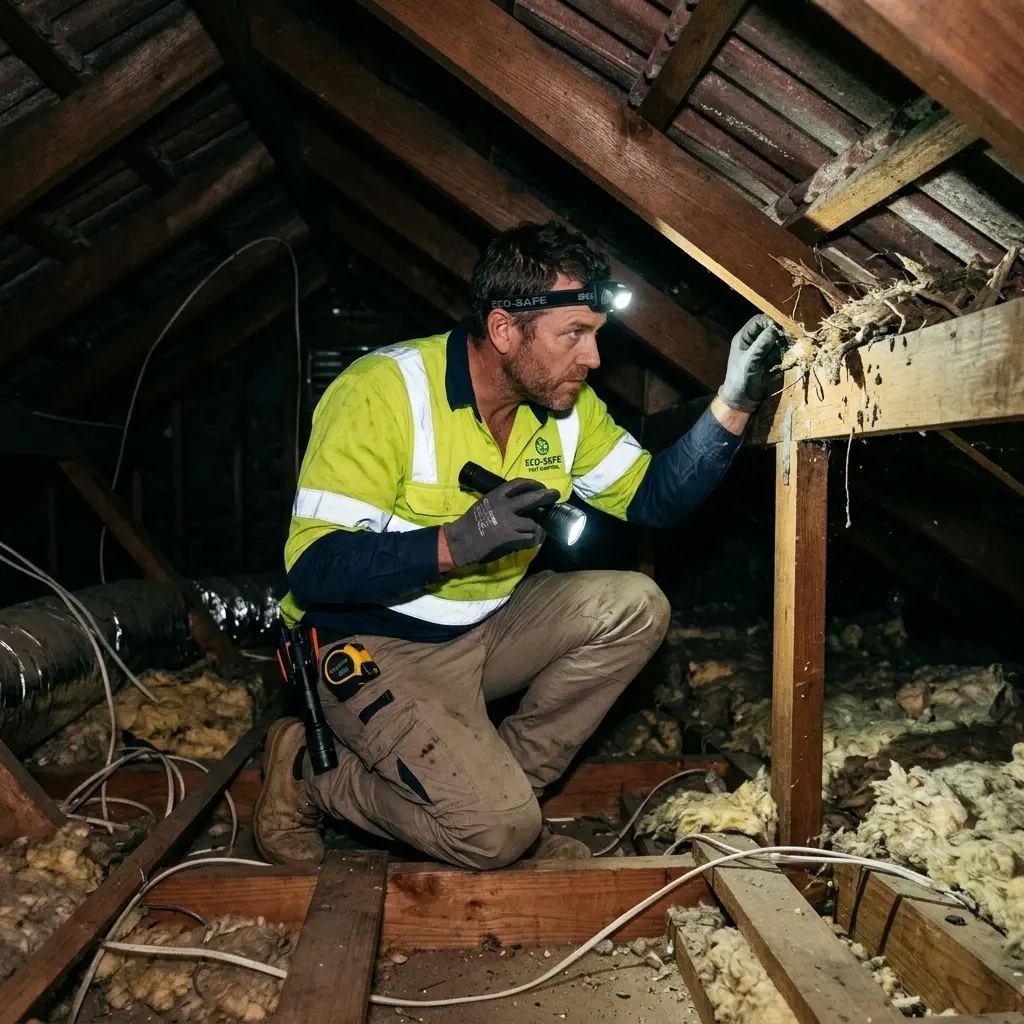
If a cat has died under your house, waiting does not make the job smaller. Fluids keep going into the soil and the bearers, and the odour keeps building in an enclosed void with nowhere to vent. Our locally based crews hold same day inspection availability across Doveton and take emergency calls at any hour.
A technician works the subfloor vents, deck edges and outbuildings, narrows the position, then puts a camera in before anything is lifted. You get told exactly where the animal is, what has to come up to reach it, and what the whole thing costs before any work starts. Our guide to how much dead animal removal costs in Melbourne explains what moves that figure.
If your cat is simply missing and the smell turns out to be a possum or a rat instead, we will tell you that plainly. It is not the news anyone wants either way, but a straight answer is better than a guess. Where it turns out to be animal rather than a cat, rat or possum: how to tell covers the difference.
These are the calls that go to the front of the queue. If any of them describe your Doveton property, ring us rather than booking online.
We provide dead cat removal across Doveton and every surrounding suburb, with crews based locally so less of the day is spent driving to you.
Need immediate Dead Cat Removal? Our emergency team is available across all suburbs.
Call Emergency LineOur Doveton crew also covers the suburbs right next door, so dead cat removal in any of these is the same short drive.
Guides & Insights
Reading That Saves You A Callout
Practical explanations of what you are smelling, what it is likely to cost and what to do first in Doveton.
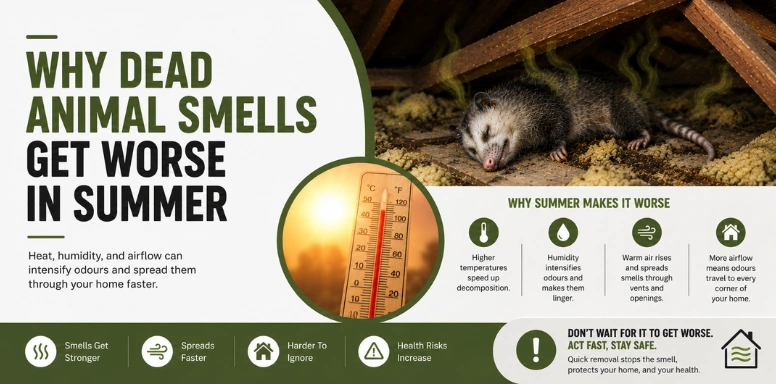
The same carcass behaves entirely differently in January than it does in July. Here is the chemistry behind it, and why summer shrinks your decision window to days.
Read the guide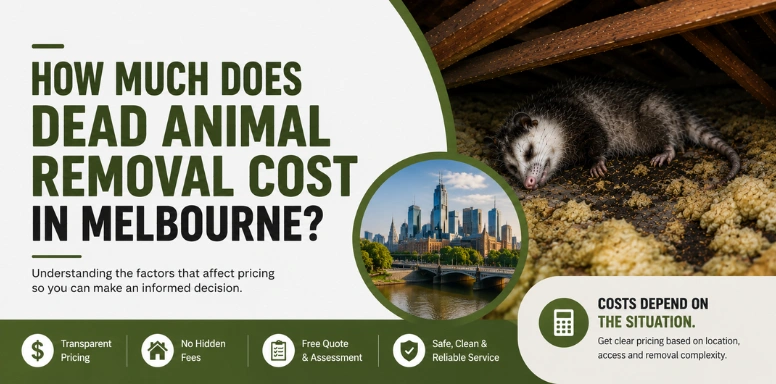
Nobody can quote this properly over the phone, and anyone who does is guessing. Here are the six factors that move the number, and how to tell a fair quote from a bait price.
Read the guide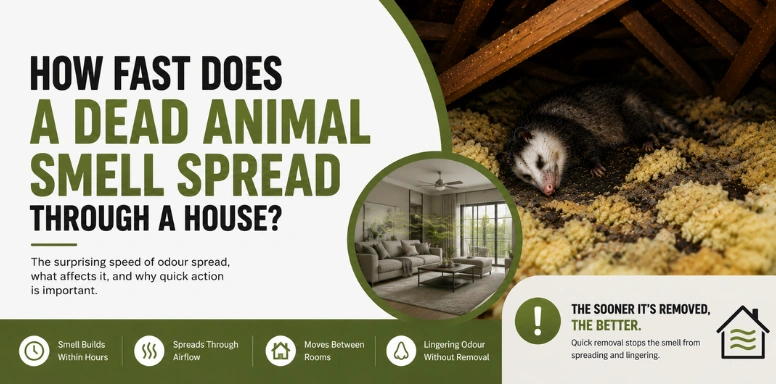
By day four it seems to be everywhere and people assume there must be more than one animal. Usually there is not. Here is how the odour actually moves.
Read the guideThe things Doveton customers ask us before they book a dead cat removal.
Whoever’s Cat It Was, It Deserves Better Than A Wheelie Bin.
We will recover the animal carefully, scan for a chip so an owner can be told, arrange cremation if you want it, and treat the ground so the spot does not keep reminding you. Ring us whenever you are ready.
6:00 AM - 11:30 PM, 7 Days a Week for Doveton, VIC 3177 and every surrounding suburb.